"The Rules of the Game" - Jean Renoir (1939)

Arguably the greatest film ever made, Jean Renoir’s The Rules of the Game (La Règle du Jeu, 1939) seems at first appearances to be conventional, and yet it stands in a class of its own. One possible measure of its greatness would be to canvass all critics who have actually seen the film and ask them if they would rate it among the top five films ever made. I don’t think any other film would achieve as high a percentage of all-time top-five ratings as Renoir’s classic. And yet many appreciative critics struggle to articulate convincingly just what makes it such an outstanding work.
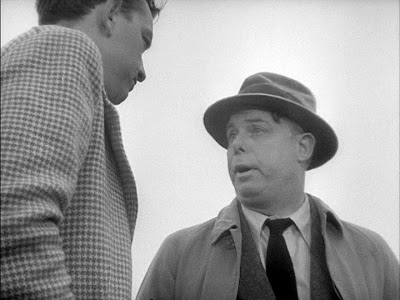
The story of the film concerns a weekend gathering of wealthy French socialites at a country estate. The focus is on various romantic flirtations and infidelities, involving servants and gentry alike, and as such and with its allusions to Beaumarchais’s Marriage of Figaro, it has all the external trappings of a light comedy of manners. Somehow, though, Renoir managed to mold this seemingly conventional material into a multi-layered and profound commentary on the nature of love, society, and the human condition. In the background, of course, was the generally shared feeling of impending catastrophe and social breakdown that would accompany another devastating world war. Perhaps it was not surprising in this connection that the ominous and gloomy light that the film cast on French society was not lost on its initial audience, who greeted the film with jeers and boos at its first screening. Within a year the French Vichy government had banned the film, and during the war the original film negative was destroyed, and the original director’s cut was permanently lost. The version of The Rules of the Game that exists today is the result of a painstaking reconstruction from some existing, cut-down production prints some twenty years later, and it is not precisely what Renoir originally released. Even so, when we see the film now, its lasting virtues shine through and transcend the war – and it is just as relevant today as it was in 1939.

There are eight principal characters whose interlocking romantic liaisons command the viewer’s attention:
  • Robert de la Chesnaye, the owner of La Coliniere country estate
  • Christine de la Chesnaye, the wife of Robert
  • Genevieve de Marras, the mistress of Robert
  • Lisette, the personal maid of Christine
  • Edouard Schumacher, the estate gamekeeper and husband of Lisette
  • Andre Jurieux, a heroic aviator
  • Octave, a childhood friend of Christine
  • Marceau, a poacher
The lustful associations are complex. Robert is romantically involved with his mistress, Genevieve, and his wife, Christine, who in turn is the object of the amorous intentions of Robert, Andrew, and Octave. Lisette is desired by Marceau, Octave, and her husband, Schumacher. In addition, Andre is loved by a less important character, Christine’s niece, Jackie. All of these various liaisons and flirtations go on in parallel over the course of a weekend gathering at La Coliniere. Because of the concurrent nature of the evolving relationships and the fact that the focalization is spread out over so many characters, the plot structure is fluid, with no real clear-cut boundaries. Nevertheless, one could schematically partition it into the following sections:
  1. The Hero Arrives (21 minutes). Andre Jurieux is seen heroically landing his plane in Paris after a solo, transatlantic flight in record time. When interviewed by a breathless radio reporter at the scene, though, Andre petulantly expresses disappointment that his unnamed beloved (Christine) is not present to greet him. His friend Octave is there, though, and he scolds Andre for not playing the proper role of a national hero. The scene switches to the Parisian residence of the de la Chesnayes, where other characters are introduced. In a phone conversation, Robert tells Genevieve that he wishes to break off their illicit affair in order to achieve honesty in his marriage. Octave, an old friend of both Andre and Christine, seeks to cool Andre’s unrequited ardor and convert it into “friendship” by having the hero invited to a weekend hunting party at La Coliniere, the de la Chesnaye country estate.
  2. The Chateau at La Coliniere (23 minutes). As various guests arrive, the estate gamekeeper, Schumacher, is instructed by Robert to reduce the rabbit population on the grounds without using fences. Making his subsequent rounds on the estate, Schumacher catches in the act a local poacher, Marceau. But Marceau’s rabbit-trapping skills appeal to Robert, who hires him to work in the chateau. As soon as Marceau arrives at the main house for work, though, he begins boldly flirting with Schumacher’s wife, Lisette.
  3. The Hunt (for Animal Prey) (12 minutes). In a stark scene the wealthy guests, including women, are equipped with rifles and array themselves in blinds on the grounds, while the servant beaters drive “game” fowl into the air so that they can be shot. The guests blast away with their guns at anything that moves, with Robert shooting mostly at rabbits (not considered “game” by the hunters) in order to help rid his estate of the pest. This entire scene, which highlights the nonsensical slaughter of sentient beings for "sport", is a metaphor for the unreflective way we let our lives be governed by conventional rules that compromise our humanity. Later on in the film when one of the main characters is tragically killed, Marceau remarks, “He didn’t suffer. He dropped like an animal in the hunt.” At the close of the hunt, Robert meets Genevieve in a remote location and politely terminates their liaison. But Christine happens to spy their farewell embrace through viewing glasses and now first learns of her husband’s affair, which she thinks is still aflame.
  4. Human Prey at the Chateau (28 minutes). After the hunt, the guests socialize and put on their own costumed music-hall entertainment, while at the same time there are parallel trysts and flirtatious encounters (all ill-fated) involving (a) Christine and one of the guests, St. Aubin, jealously watched by Andre, (b) Robert and Genevieve, and (c) Lisette and Marceau, jealously stalked by Schumacher. Things only get worse, as misunderstandings, angry confrontations, and Schumacher’s jealous attempts to gun down Marceau bring the entire party to pandemonium. This justly-acclaimed sequence is a masterful, almost delirious, display of deep-focus mise-en-scène – the pinnacle of Renoir’s career.
  5. The Unraveling (23 minutes). With order seemingly restored and Schumacher and Marceau dismissed from service, Christine and Octave retire to a greenhouse to talk things over. Their philosophical discussion about human nature and love is both a reflective commentary and an intimation of deeper affection. But a final, tragic misunderstanding puts a rueful end to their hopes and to the story, as well.
Certainly The Rules of the Game is more than an upstairs-downstairs comedy of manners. But many critics see the film primarily as a castigation of the outmoded European upper-class values and social irresponsibility in the face of impending war. To me the film has grander and more profound themes that relate to the fundamentals of social interaction. In fact on repeated viewings, one finds new elements and nuances on which to reflect.

Social class and the rules. On the general subject of social class, there are interesting phenomena on display that relate more generally to how society operates. For people of any stripe, there are the “rules of the game”, the norms and policies that specify proper behaviour. But the game rules apply differently, depending on social class. For the upper-class people, the rules can easily be bent according to circumstances and convenience. For example Robert, Genevieve, and St. Aubin, who all belong to the privileged class, are quite willing to engage in illicit affairs. For them such pecadillos are merely minor transgressions that can be overlooked in the larger scheme of things. But for the lower classes, the rules set up serious behavioral boundaries. For example, Schumacher knows that his boss, Robert, wants to rid the estate of rabbits, but he still cannot tolerate the poacher Marceau’s rule violation. But for Robert, Marceau’s rabbit poaching seems downright beneficial, and the usual prohibition against poaching can be set aside in his case. Similarly, among the upper-class set at La Coliniere, individual social outliers are tolerated if they sport the wealth and/or proper manner appropriate to the set. Thus, both Robert, who has Jewish ancestry, and one of the guests who is conspicuously homosexual, are accepted as belonging to the upper class in-group, something not so easily attainable at the lower social rungs.

It is interesting that Andre, Christine, and Octave all stand somewhat outside the circle of upperclass society.
  • Andre is a temporary member by virtue of his role as the national hero. But heros are expected to stand outside ordinary social contexts and represent idealized virtues. This is why they can gain universal acclaim, but the demands of this role are almost impossible to meet in practice for very long.
  • Christine is the aristocrat imported from Austria, an outsider who struggles to adjust to the customs of the French gentry.
  • Octave (played by Renoir, himself) is simply the tolerated friend of the aristocrats – the would-be artist who sees it all from the outside and can only express frustration at his inability to reconcile everyone’s (including his own) romantic dreams with reality.
Among the lower classes there are gradations, too. Schumacher, who tends to the grounds outside the main house, stands at a lower social position than the servants in the house, who work more closely with the gentry. Marceau, the poacher, is outside and below this social scheme altogether. Accordingly Schumacher follows the rules rigidly, while Marceau has no moral inhibitions whatsoever (he has nothing to lose), which unequally tilts their amorous face-off over Lisette from the outset. As for Lisette, she clings to her social status as Christine’s personal maid more fervently than she does to any other personal relationship.

Communication and Context. On a deeper level The Rules of the Game examines the ever-growing difficulty associated with the overlapping rules of social behaviour. Highlighted here is the fact that every human exchange necessarily has its own specific interactive context, and these contexts cannot be universally shared. Nor can these contexts be neatly isolated. Life was so much simpler in the past when social classes were more isolated and there was less intermingling of contexts. As the guests and servants intermingle in The Rules of the Game, they must continually shift gears and play according to the different rules. Everything would work nicely if there were a universal set of rules that could apply everywhere, but Renoir is reminding us that such a dream is impossible. Robert de la Chesnaye implicitly has that unattainable dream, though – he has devoted his life to collecting mechanical devices in which automated dolls act according to mechanical instructions. If only all of life could be mechanized according to some such set of rules, everything would work out perfectly and without awkward mistakes, just as Robert’s mechanical figures do when they are operated. In such an orderly, mechanically-driven world, Robert wouldn’t find himself in the position of necessarily having to disappoint someone (either Genevieve or Christine) – there would be a provable solution to every social problem. But of course it didn’t work that way in 1939, and in today’s ever more intermingled society, the situation gets only worse. (If his character role were to be translated to today’s setting, Robert would probably be obsessed with automated computer technology.) Robert’s interest in mechanical toys reflects his underlying “Objectivist” stance (see the discussion of Objectivism in my review of Michael Moore’s SiCKO). The reductionist world-view of the Objectivist is widely held in modern society, but it usually doesn’t work very well in connection with human interactions. In human social situations, context cannot be abstracted away as it often can in the physical sciences – there are too many details and too much complexity that cannot be covered by the rules of interaction. But today we often pretend that we can do the impossible: live according to simple social rules. To carry on this pretense, we inevitably have to lie (we even sometimes wind up fooling ourselves). When in the film the idealistic romantic, Christine, complains (after learning about her husband’s infidelity) that for three years her life had been based on lies, Octave points out to her that today everyone lies, including the government, the pharmaceuticals, and the media, so it should be OK for simple people like themselves to do it, too. We must ultimately acknowledge that social rules of a mechanical nature can only offer skeletal guidelines for behaviour. Rather than invariably seeing deviations from these rules as violations, these rules and their enforcement must sometimes be moderated by higher-level values of love and tolerance.

Love and Brotherhood. Interestingly, many of the characters do indeed come together at various times in the story and share a kind of mutual, humanistic bonding that transcends the specific social game-playing in which they are momentarily involved. This humanistic bonding suggests something more universal and crosses the boundaries of class. The following is a list of the “brotherly” or “sisterly” interactions that take place in this manner during the film:
  • Robert ↔ Andre
  • Robert ↔ Octave
  • Robert ↔ Marceau
  • Marceau ↔ Schumacher
  • Marceau ↔ Octave
  • Octave ↔ Andre
  • Octave ↔ Christine
  • Christine ↔ Genevieve
  • Christine ↔ Lisette
In each case the two interlocutors share a certain amount of candor and honesty, during which time they let their guards down and are relatively comfortable with each other as equals. Robert attempts to achieve such an encounter with Genevieve, but she will have none of it; Genevieve longs for something higher and even more universal.

What Genevieve would like (but knows she cannot realistically get) is something that Andre, Christine, and even Octave, all passionately desire: romantic love. Romantic love is universal, infinite, ego-dissolving, and in its ideal it transcends all contexts and boundaries. To be a lover is to live a dream, to play an idealized role in a dreamscape that is almost impossible to sustain for long. In the last analysis, neither Andre nor Octave can fulfill the extreme demands of romantic love, and they succumb to concerns for the social rules that govern their ordinary lives. This is the lament that Renoir plays out for us in The Rules of the Game.

Renoir’s achievement. Renoir managed to do justice to all these issues under discussion by cinematicly painting them in richer, more subtle shades than one sees in most films. The resulting effect is dazzling. The cinematography is extraordinary, with multiple, meaningful actions taking place in depth, using deep-focus photography. In the rapturous Act 4 ("Human Prey at the Chateau”), there is a breathtaking sequence of multiple 30-to-45-second shots in which many of the characters come in and out of the picture, seemingly at random, to interact in complex ways. In this sequence, the multiple romantic threads crisscross in the chateau corridors, and yet they appear more or less naturally, with a minimum of editorial cuts. Throughout these shots, Renoir maintains fluid camera movements and temporary compositions that maintain a visual balance, matched only perhaps by Mizoguchi. At the same time, the actors remain in-character and sustain their distinct personas. All of the acting is physically and visually expansive, yet effective, with memorable performances from veterans of his past works, including Julien Carette (as Marceau), Gaston Modot (as Schumacher), and Marcel Dalio (as Robert de la Chesnaye). Nora Gregor played the role of the semi-outsider, Christine, who in the story is said to have arrived years earlier from Austria, which matched her real-life circumstances -- she was, herself, a recent refugee actress who had fled Austria as a result of the Nazi Germany depredations.

It is reported that Renoir had completed less than half the shooting script when filming began, so that he must have made up a good part of the shooting scenario in a relatively extemporaneous fashion. It is hard to believe that such carefully blocked-out shots, with such fully-fleshed-out and nuanced acting, could have been accomplished in a supposedly impromptu fashion. You really must watch carefully this section of The Rules of the Game to appreciate just why the film is held in such high esteem and why it has had such a mesmerizing effect on directors that followed. For one example (there are several) of this virtuosity keep an eye out for the 43-second shot scanning the audience during the costumed performance in the darkened little theater that features Andre jealously watching St. Aubin and Christine, while Schumacher jealously searches for Lisette and Marceau. Alain Resnais said that he was stunned when he first saw the film. Robert Altman said that the film taught him the “rules of the game” of filmmaking, and indeed it led him to emulate Renoir’s multi-character, multi-layered narrative style in his own films.

The Rules of the Game was Renoir’s career high point, coming directly after two other outstanding films of his that were stylistically and thematically somewhat different: La Grande Illusion (1937) and La Bête Humaine (1938). Soon the world war would overwhelm Europe, and Renoir would flee to the United States, remote from his built-up ensemble of artistic collaborators. Through the various vicissitudes that would follow in his travels, however, he would always retain his unique inclusive perspective on the human condition.
★★★★

“SiCKO” - Michael Moore (2007)

Michael Moore’s documentary film SiCKO (2007) raises such fundamental and interlocking issues about modern society and culture that it is difficult to know where to start the discussion. With documentary films, of course, there are always two basic threads that one can usually consider separately: (a) the external issue under discussion and (b) the nature of the documentary expression undertaken by the filmmaker. But with Moore’s film, everything is connected and overlapping.

The subject matter of SiCKO, the external issue under discussion, is the American healthcare system and what can be done to address the fundamental concerns that have been raised by its critics. Certainly this is a subject that stands at the top of peoples’ concerns worldwide: the quality of healthcare, which is fundamental to basic quality of life. Of course there are some people who stubbornly insist that the American medical system is the best and most efficient in the world, but most people today recognize that there are deep flaws with the way medical care is delivered in the United States. There are many different measures that testify to this, but consider just these two:
One of the basic problems with the US system is that it, alone among leading developed nations, does not provide its citizens with universal guaranteed healthcare, leaving about fifty million people without any health insurance at all. One could spend weeks, even years, examining the specifics of this vast, complicated, and important subject, and a two-hour movie is not going to do that. In fact SiCKO doesn’t introduce much information that most people don’t already know, but it does go on to raise an even larger issue – and in this connection it rhetorically asks a disturbing question: what kind of society does America have that it can treat its own fellow citizens as objects that have a price, i.e. virtually as “pieces of meat”?

Let us put the disturbing nature of that question aside for the moment and consider the other main topic of discussion here, which is the nature of the documentary film expression employed by Michael Moore. I am always amazed by the animosity and contempt that so many people seem to feel for Moore. Right-wing and politically conservative people, of course, are inevitably offended by his positions, and they might be expected to dismiss his films. But there are also many political independents, even a great many people on the political left, who dismiss Moore as a liar, a “sleaze bag”, a slovenly showman, someone who is out to distort the truth and manipulate the audience. Why do they hate him so much? For one thing, they seem to despise him for appearing personally in his films and confronting some of his subjects on camera with troubling questions, which Moore’s critics often consider to be self-serving. But there is a deeper American cultural theme that underlies this animosity towards Moore, and it has its connections with the history of documentary films.

Documentary films are supposed to expose the “truth” about some subject. Inspired by the demonstrated success of Western empirical science, a good documentary film is supposed to lay bare the objective facts of a situation, so that a judicious and unprejudiced viewer can see objective reality and arrive at the truth. This is in direct contrast with propaganda films, a label that Moore's rabid critics attach to his films, which display a willingness to distort the facts in an effort to persuade the viewer on some point. In ever-more-strenuous efforts to get at the underlying truth of a subject, documentary filmmakers have always continually striven to efface the subjectivity of their own point of view by attempting to expose “the truth” in ever-more objective detail. An idealistic extreme of these efforts has been cinema vérité. I commented about cinema vérité in connection with my review of Kiarostami’s Close-Up (1999):
The notions of cinema vérité, which actually go back to the work of Dziga Vertov and his Russian colleagues in the 1920s, became popular in France during the 1960s. The goal was to capture objective reality, “the truth”, with the camera. When the popularity of cinema vérité spread to the US, it became known as “direct cinema”, but there was an often-overlooked difference. The American filmmakers adopted a “fly-on-the-wall” approach: they wanted to make the camera so inconspicuous, so “invisible”, that the subjects being filmed were not consciously aware of its presence. The camera was to be an objective record of reality. But of course this is a fiction: the camera always has its presence and its point of view in any filmmaking activity. The French cinema vérité documentarians tended to acknowledge explicitly this presence of the observer, and they incorporated their own observations into their recordings.
The fundamental distinction between French cinema vérité and American direct cinema relates to a fundamental philosophical divide separating two ways of looking at the world, which I call “Objectivism” and “Interactionism”.
  • Objectivism is the naive objective reality stance, which most of us adopt most of the time in our everyday activities. The objective world is assumed to be scientifically knowable and reducible to elementary entities that operate according to laws that can, in principle, be discovered by an “objective” observer. This objective world is “out there” – independent of any observer. To know about this world, one’s act of scientific observation must avoid any interference with that which is being inspected. Isaac Newton’s Laws of Physics are representative examples of Objectivism’s achievements.
     
  • Interactionism (which could also be called the “the Phenomenological”) recognizes that the observer invariably and essentially has an effect on whatever may be observed (as attested to by physicist Werner Heisenberg with his Principle of Uncertainty). For Interactionism, every human activity invariably involves an embodied interaction with something else (even, as Heisenberg noted, when interacting with a scientific instrument). In this respect, rather than Cartesian dualism and Newtonian analysis, one should associate Interactionism with Buddhism, Sufism, and the work of Merleau-Ponty. From the Interactionist perspective, Objectivism is only an abstract ideal that has pragmatic application in many domains, but not all. But real experience, which is inescapably interactive, can only be approximated by Objectivism -- and only approximated accurately some of the time, such as when observing more remote physical objects, like the stars. In other spheres of activity, where account of human interaction cannot be minimized, such as the sphere of human social activity, Objectivist approximations are particularly weak and inaccurate.
“Direct Cinema”, which has dominated the American imagination when it comes to documentary filmmaking (even though it is only one style and not even the most common practice), exemplifies Objectivism, or claims to, anyway. Note that in fact, direct cinema documentary filmmakers have shooting ratios as high as 100 to 1, which means that out of all that “fly on the wall” material that has been collected, only a small amount of footage is actually used. This means that the film editor has been highly selective in terms of what makes the final cut, and this selectivity almost invariably reflects a personal point of view. In contrast with Objectivist-influenced American direct cinema documentarians, outstanding European documentary filmmakers, such as Werner Herzog and Louis Malle, have been Interactionists. They recognize that every documentary film presentation necessarily involves interactions on the part of the filmmaker with his subject material, and they explicitly acknowledge that interaction by supplying their own personal commentary. Michael Moore belongs to the same camp and is an Interactionist, too, but he is operating in a popular society that clings stubbornly to the belief that Objectivism is the only option.

So in SiCKO Moore gives the viewer his personal narrative describing his investigation into a sick social patient, which in this case is the whole of American society. You may well not agree with his point of view, but this is his journey and his telling. This makes his film not a scientific investigation (in fact there is not much material here about the US healthcare system that you don’t already know, anyway), but a personal story, and so it makes the film that much more compelling (and correspondingly infuriating to his opponents).

Moore’s story has a well-coordinated argument that is structured almost like a medical diagnosis, with an increasing sense of irony as the film progresses:
  • The unwanted symptoms are first examined (Section 1).
  • Next the recent history of how things got this way are covered (Section 2).
  • Then successive examples of successful “treatments” given to other “patients” (countries) are presented (Sections 3-6).
  • The final diagnosis is an exercise left for the viewer. But Moore reminds his audience at the end that America has always opportunistically borrowed good ideas from abroad and adopted them without prejudice. It is time, he says, for America to do that again.
Supplementing the main sections are also some brief entr'acte pieces that are used for maintaining the mood and tempo of Moore’s presentation.
1. The Difficulty of Getting Medical Coverage (30 minutes). The first section of the film documents an extended series of outrageous personal tales describing ordinary people who have been denied medical insurance and therefore have not been able to obtain critical medical treatment that they could not afford. Of course one could complain that these are only selected cases taken from a large society, but the cases appear to reflect not just individual mistakes, but systematic policies that are unjustly applied on a wide scale. There are several types of problems described:
  • Many people cannot obtain health insurance, even if they have the money to pay for it. The insurance companies reject applicants if they are too thin, too fat, or otherwise considered to be risky investments.
  • Insurance companies deny claims and cancel policies if they can find some unreported pre-existing condition, even when it is as trivial as a past yeast infection.
  • Insurance companies will not provide doctor-recommended and potentially life-saving treatment to a patient if it can be classified as “experimental” (and therefore not part of the standard practice).
This section also documents doctors and case workers in the industry who are explicitly rewarded and paid bonuses for rejecting patient claims. The goal of the insurance companies, and their allies, the health maintenance organizations (HMOs), is to deny treatment as much as possible in order to maximize profits.

Many of the cases presented portray people who died because they were denied treatment that could have saved their lives. This section has an emotive impact. The viewer meets these people; they speak to the camera; and then many of them die. Although critics might complain that these selected cases are grossly unrepresentative of US healthcare, one has to ask how even one of these tragic cases has to come to pass.

2. Recent US Healthcare History (12 minutes).
  • This historical background begins about forty years ago when archived US Presidential recordings reveal that Richard Nixon was attracted to supporting the idea of establishing HMOs, because these new organisations would try to reduce medical treatments as much as possible in order to secure higher profits.
  • The commentary then recounts Hillary Clinton’s ill-fated efforts to reform the US healthcare back in the early 1990s.
  • It is argued that the reasons behind Hillary’s speicific failure and always behind the political difficulties of American healthcare reform are the entrenched interests of the insurance companies, the HMOs, and the pharmaceutical corporations. All of these organisations are enormous economic enterprises that can use their economic clout to influence the government by effectively making campaign contributions (i.e. offering bribes) to government officials. This has resulted in a convenient partnership – while each of the CEOs of the big healthcare organisations gets salaries and payouts amounting to hundreds of millions of dollars per year, US senators are also all getting hundreds of thousand of dollars per year in campaign contributions.
  • A particularly egregious example (presented with a photoshopped image to dramatize the point) is that of Billy Tauzin, a former US Congressman who left Congress and went on to become the CEO (with a $2 million salary) of the principal drug lobby, PhRMA.
3. Canada (10 minutes). The scene shifts to Canada, which does indeed supply universal healthcare to its citizens. Although US conservatives issue dire warnings about lengthy patient waiting lists in Canada that would presumably make their system undesirable, Moore suggests that there are some Americans who would definitely prefer the Canadian system over their own. He documents an American woman who tries circuitous schemes to get medical coverage in Canada that is not available to her in the USA. He also reports that even the Canadian Conservative Party is staunchly committed to the Canadian universal healthcare coverage.

4. England (19 minutes). England is another country offering universal healthcare coverage to its citizens. Moore shows that England even offers (or has up to now) free coverage to tourists who injure themselves while doing foolish things during their visits to the country. This section also includes enlightening remarks from venerable British politician Tony Benn about the England’s sixty-plus-year experience of universal healthcare. To give up such a programme in England now, Benn says, would be as unthinkable as taking back the right of women to vote: universal healthcare is now an essential part of British civilization.

Entr’acte. This interlude covers the sad tale of a female HMO worker whose young daughter dies during an emergency illness, because the HMO would not authorize life-saving treatment at the nearest hospital.

5. France (15 minutes). France, number one on the WHO tables, is of course the best when it comes to healthcare. More examples of the superior French system are provided, and this is further attested to by some American expatriates living in France who swear by the French approach.

Entr’acte. Magnifying the contrast between the social inclusiveness of France and England and the divisive, profit-driven US system, this section shows how Los Angeles hospitals take indigent patients needing treatment and dump them off as if they were refuse at skid row shelters for the homeless.

6. Cuba, the Ultimate Irony (12 minutes). Taking note of the US Military’s claims that prisoners held in Guantanamo military facilities get comprehensive medical care, Moore decides to see if the US government is willing to offer the same kind of treatment to some real American heroes who have been neglected. These are three volunteer 9/11 rescue workers who are still suffering from debilitating conditions incurred as a result of their efforts, but who cannot obtain medical coverage, because they were acting as volunteers and not employees. Why is it that so-called “terrorists” get better medical care from the government than volunteer patriots? This entire section, of course, is a stunt, but Moore sets it up to dramatize the inequities of the American system. His “boat people” voyage, with his ill passengers in tow, doesn’t make it onto the Guantanamo Bay military base, but the whole trip was basically a ruse for him to convey his patients not to the base, but to Cuba proper. That impoverished country, as we should know, just happens to have universal health care, and, as a consequence, a higher life-expectancy and lower infant mortality rate than the US. His patients all get the treatment in Cuba that is not affordable to them in the US.
Moore’s thesis, of course, is not just that the US healthcare system is ill, but that entire US society is unwell. In France, England, Canada, and Cuba, they live in a world of “we”, not “me”. From a larger perspective this social/political problem is intimately associated with the rigidly Objectivist underpinnings of US popular culture that tries to comprehensively apply the idea that just about everything is property that can be rightfully exploited by its individual owner. A prime example of this reductionist mentality is the crippling insistence on the part of the US to impose worldwide “intellectual property” laws – the notion that an idea, an item of thought, can be a piece of property that is owned by an individual. In accordance with this line of thinking, US corporations have engaged in biopiracy by attempting to secure “intellectual property” ownership in foreign countries over essential food chains and traditional medicines, such as in India in connection with aubergines and basmati rice. I will cut short further discussion on the limitations of the notion of “intellectual property” here and simply refer the reader to the commentary in my review of Brett Gaylor’s RiP: A Remix Manifesto (2009). The main point to be drawn in this connection is that America's over-application of Objectivist-inspired “property thinking” has diminished its capacity to deliver healthcare properly. Pharmaceutical companies, HMOs, and health insurance companies are only interested in profitable returns on their investments, not on tending to the health needs of the citizenry. The real solution to this problem is to use an Interactionist-inspired approach, and that is just what Canada, England, France, and Cuba have done.

Traditional conservative commentators, however, try to cast this healthcare debate into the old and simplistic notion of Capitalism versus Socialism, but this is not the signal dichotomy for the issue at hand and only confuses the debate. For one thing, two of the major communist countries, China and Viet Nam, do not now offer universal healthcare for their citizens. Their own ruthless adoption of Objectivist principles has led them to partially abandon the community-oriented welfare of their citizenry. In fact the places were universal healthcare is primarily offered today are in European countries that are primarily capitalist. And the capitalist-socialist divide is further muddied by the practices of some so-called bastions of capitalism. For example the WTO purports to champion capitalism, but engages in practices that actually restrict free trade by pressing for the propagation of “intellectual property”, laws. So, too, the “privatized” (but property-obsessed) HMOs largely restrict free trade and the freedom of consumer choice of their customer-members.

In fact capitalism is not essentially Objectivist, and it can comfortably accommodate an inclusionist, Interactionist mode of operation, as is evidenced by France, England, and other European countries. (Note that Moore also had a considerable amount of film footage about Norway, but he didn't include it in the final edit, because it was redundant to his argument.) In those progressive European countries, there is a recognition that people are not pieces of property for which only a return on investment is expected. A point that Moore didn’t emphasize in SiCKO but that is germane to his thesis is that the reason why the Guantanamo Bay “detainees” were given proper medical care was that they were/are considered valuable pieces of “property”, not because they naturally deserve such treatment (as they should) by right of simply being human beings.

The bottom line on SiCKO, then, is that Michael Moore has told his tale and made his case very effectively. With the evidence of this film, he now has to be recognized, if he hadn't been already, as a filmmaker of the top rank. Although his appearance and verbal style is folksy, it is clear that his film has been meticulously crafted. I understand that he had over five hundred hours of film to edit – a shooting ratio of more than 250 to 1, which would exceed that of most of the direct cinema productions. He and his staff have diligently mined archival footage to support his argument, and they must have put in an enormous amount of hours putting it all together so that the exposition is brisk, clear, and hard-hitting.

Interestingly, Michael Moore’s work has been compared with that of direct cinema maestro documentarian Frederick Wiseman, because both have presented unflattering portraits of American institutions. But Wiseman is one of those sly selectors of recorded information who has managed to keep himself inconspicuous and still cunningly convey his own point of view. As much as I admire Wiseman’s work, I think Moore’s upfront approach is probably more straightforward (provided that accommodation is made for Moore’s heavy sense of irony).

Finally, in view of the evident excellence of this work and its likely positive social impact, I guess I must at last forgive Michael Moore for his wreckless public support of Ralph Nader in the critical 2000 US Presidential election. We all make mistakes, and Moore has confessed that he made the wrong move, big time, on that occasion. Since then, with Bowling for Columbine (2002), Fahrenheit 911 (2004), and SiCKO, Moore has emerged as an increasingly profound social commentator. In the end we could say that with Michael Moore's unshakable belief in, and prescriptions for, his unwell country's ability to make a recovery, he’s just what the doctor ordered.
★★★★

“The Lady Vanishes” - Alfred Hitchcock (1938)

Alfred Hitchcock’s last film made in Britain before his shift to America, The Lady Vanishes (1938), is widely viewed as one of his all-time best films. I wouldn’t put it in the category of some of his classics, but it was probably his best comedy (or, if you will, “comedy-drama”). One should also not underestimate the importance that railroad trains had during the days before widespread air travel, and The Lady Vanishes is one of the prominent films of that period, along with von Sternberg’s The Shanghai Express (1932) and Renoir’s La Bête Humaine (1938), that incorporated the metaphorical significance of trains into its narrative. The film also belongs to the well-established genre of the socially mismatched man and woman who are thrown together by adventurous circumstances and fall in love along the way, as exemplified by Capra’s It Happened One Night (1934). Nevertheless, there are some weaknesses to The Lady Vanishes that keep it below the top rank. Significant among the deficiencies are the implausible and unmotivated events that popup out of nowhere and propel the action forward.

The story, which is essentially a spy thriller, is set in a fictional and obscure Eastern European country, Bandrika, which is evidently involved in the Machiavellian political machinations going on in Europe prior to World War II. At the outset a collection European tourists has been temporarily stranded because an avalanche has blocked the railroad. When the tracks are cleared the next day, they all board the train for home (England, for most of those of interest). Once they are on their way, though, one of the travelers, a commonplace, middle-aged woman, disappears. Unraveling the reasons for this disappearance and providing assistance occupies the rest of the film. There are roughly four “acts” to the film narrative, and, interestingly, I find the second act to be the most compelling section. After that the film becomes a stock crime thriller of rather unimaginative proportions.

1. Introduction of the Characters (24 minutes). The film takes its time introducing a collection of characters who will figure in the ensuing events. These include
  • Three wealthy young ladies on a holiday. Only one of them turns out be important for the later events: Iris (played by Margaret Lockwood), who is returning home to England to marry her wealthy and socially-approved fiancé.
  • Gilbert (played by Michael Redgrave), a brash young music anthropologist, who is pursuing field studies concerning local dance customs of the region.
  • Miss Froy (played by Dame May Witty), an innocent old governess returning to England after five years.
  • Caldicott and Charters, two stuffy, upper-class English tourists with a consuming interest in a cricket test match going on in England at that time.
  • A barrister, Mr. Toddhunter, and his mistress, who are trying to avoid attracting attention to their adulterous affair.
For most of this act, the action is imperturbably scattered and inconsequential. Gilbert doesn’t even appear in the first eighteen minutes, and it isn’t until 21 minutes into the film that Gilbert meets Iris, the first circumstances of which are, naturally, far from romantic. At the very end of this act, 24 minutes in, an evening balladeer is mysteriously strangled, and the tone has suddenly shifted from idle chit-chat to more omenous things. (The presumed idea that the balladeer’s melody contained a secret message to be memorized for conveyance back to the home front is reminiscent of a similar ploy in von Sternberg’s 1931 outing, Dishonored.)

2. Iris Alone (31 minutes). Before the train departs, Iris is hit in the head by a falling brick that was apparently intended for Miss Froy. This is the first occurrence of a recurring pattern in the film: the audience is often ahead of the characters in terms of awareness of threats. As the train departs, Iris, still dazed by the knock on the head, joins Miss Froy’s compartment, and they chat. When she later awakes from a brief snooze, she discovers that Miss Froy is gone, and everyone around her denies ever having seen the old lady. Of course we saw Miss Froy, but the others deny her existence and argue that Iris’s accident has led her to hallucinate the old lady’s presence. With paranoia mounting by the minute, Iris becomes increasingly distraught by the evident conspiracy around her to deny the truth, and she finally enlists the sympathetic, but politely skeptical, Gilbert to her cause. The dramatic buildup in this act is superb, as Iris’s concerns for her friend is confidently dismissed and “explained” by an onboard psychiatrist, Dr. Hartz (played by Paul Lukas), as merely a temporary neuropathology. But at 55 minutes into the film, Gilbert finally notices a discarded tea package that confirms Iris’s story is true, and he rallies to her cause.

3. Iris & Gilbert Seek Miss Froy (20 minutes). Gilbert and Iris now actively look for clues about Miss Froy and discover that an Italian magician on the train is part of the plot. Eventually it is revealed to the viewer (but away from the focalization of Gilbert and Iris) that Dr. Hartz is an evildoer and in charge of the conspiracy. A few minutes leader Hartz reveals his malevolence to Gilbert and Iris after having given them a drink that will poison of heavily sedate them. But wait, Hartz’s scheme is mysteriously sabotaged by one of his own charges, a woman disguised as a nun, who failed to put the sedating drug into the drinks. Iris and Gilbert find and revive Miss. Froy, who is actually a British spy and who had been wrapped in bandages as Hartz’s patient, as the train arrives at local the station.

4. The 2nd Train Trip (18 minutes). Dr. Hartz realizes that his plans have gone awry, but he is still in charge at the local train station and directs the carriages containing the British passengers to be uncoupled and attached to a train that will take them to an isolated area inside Bandrika. When the train stops, the British passengers are trapped inside their carriage, as soldiers prepare to take them prisoner. While Miss Froy escapes on foot out a back window, a fierce gunfight breaks out between the passengers and the soldiers. Meanwhile Gilbert and Caldicott manage to restart the train themselves and drive their comrades back across the border into “free” territory.

At the end of the film back in London, Iris abandons her betrothed and accepts Gilbert’s marriage proposal, and then they both happily learn that Miss Froy, too, managed to make her way safely back to England and report to the Foreign Office. Love triumphs in the end, and evil foreign plots have once again been stymied.
Francois Truffaut said that he so much admired The Lady Vanishes that he sometimes saw it twice in a week and that he knew the film by heart. To me the film is an amusing piece of fluff but falls short of Hitchcock’s best efforts. All in all, the film is something of a paean to the British cultural identity in the face of the gathering international political storm clouds of the late Thirties. This may appeal to Anglo-American patriotism, but it reduces some of the performances to more transparent schematizations. For example, the barrister, Mr. Toddhunter, has no real significance to the story other than to portray the kind of “appeaser” that was held in much contempt by the warhawks of those days.

To be sure, there are some delightful elements in the film to be savored. One example is associated with Hitchcock’s adroit mechanisms of visually alerting the viewer to something that is not yet evident to his players. When Iris first chats with Miss Froy on the train, the old lady uses her finger to mark out the spelling of her name, “Froy”, on the dusty windowpane next to them. Later, after everyone denies the existence of Miss Froy, Iris and Gilbert sit down by the same window. The viewer clearly sees the name “Froy” still marked on the window, while Iris and Gilbert blithely converse for a couple of minutes, oblivious to the telltale evidence demonstrating the real existence of the old lady. It is a delicious moment of suspense as the viewer waits impatiently during the conversation for what can only be inevitable: for Iris to glance at the window and recognize the significance of the marking.

The acting and characterizations in The Lady Vanishes are relatively uneven. Margaret Lockwood, as Iris, has the allure and spark to sustain interest in her persistent efforts to find and assist her friend, Miss Froy. Indeed the energetic performance of this beautiful brunette (this was before Hitchcock’s later obsession with washed-out, stereotyped blondes) manages to sustain the narrative throughout. But Michael Redgrave, who was a prominent stage actor and making his first major film appearance, is much too cavalier and self-conscious to be believable. The whole thing seems to be just a lark for him, as he smirks his way from one scene to another. The result is that the chemistry between Iris and Gilbert is pretty artificial and nothing like the Gable-Colbert combination in It Happened One Night. Many of the other characters are also relatively wooden or hammy, but the duo of Caldicott and Charters (played by Naunton Wayne and Basil Radford) rise above such banalities and almost make the film their own. Their brilliantly humorous and spot-on portrayals of two idle and useless English gentlemen (very much in the P. G. Wodehouse tradition) is hilarious and irresistibly whimsical. I couldn’t get enough of them, and, tellingly, I preferred their screen presence to everyone else's, including those of the two leads.

But while Wayne and Radford almost make the film wonderful, the many implausible elements in the plot are just too noticeable and unmotivated to be ignored. Here are some of them:
  • The motivational background concerning Miss Froy’s spying activities is never provided. What is it that she knows and intends to convey to the British Foreign Office that is so important? We never learn that.
  • The member of Dr. Hartz’s gang of conspirators dressed up as a nun, who saves Iris and Gilbert, is a shameless and inexcusable example of a deus ex machina. She just pops up out of nowhere – no foreshadowing, no motivation, nothing – and betrays Hartz for no apparent reason.
  • When Hartz, allegedly a doctor, examines Iris and Gilbert at the time they are feigning drugged unconsciousness, he doesn’t merely glance in their direction. He actually raises the closed eyelid of Gilbert to check if he is insensate. It is unbelievable that he would not see at such a close range that Gilbert is merely pretending.
  • After getting knocked out in the fistfight in the baggage car, how does the villainous magician recover so quickly and why does he later show no acknowledgment of what happened?
  • How do Gilbert and Caldicott manage to drive the train back across the national border?
Overall, The Lady Vanishes is a lightweight, escapist caper, but nothing so sublime as Hitchcock’s wonderfully told The 39 Steps (1935).
★★★

"A Time for Drunken Horses" - Bahman Ghobadi (2000)

Kurdish Iranian filmmaker Bahman Ghobadi grew up during the devastating Iran-Iraq War, which killed several of his relatives. After starting out in photography, he began attracting attention in his twenties from his short documentary films about Kurdish life. After serving as Abbas Kiarostami’s assistant director on The Wind Will Carry Us (d Mā-ra- Khāhad Bord, 1997), he expanded the theme of one of his short documentary films, Life in Fog, to make his first feature film, A Time for Drunken Horses (Zamani Barayé Masti Asbha, 2000). The film, about the harsh circumstances of an impoverished Kurdish family near the Iran-Iraq border where the local economy subsists around the dangerous smuggling trade, was an immediate sensation and multi-award winner, including the FIPRESCI critics prize and the Camera D’Or at the Cannes Film Festival.

The Kurdish people live mostly in Kurdistan, a mountainous region of the Middle East that covers parts of Iran, Iraq, Syria, and Turkey. For them the national boundaries that separate their people are artifacts of past political processes that excluded their participation. But paradoxically these same artificial boundaries that close off free exchange have presented a secondary, though fraught with danger, economic opportunity: smuggling. A Time for Drunken Horses tells the story of an orphaned family trying to survive in these perilous conditions.

The film was shot on location in the rugged mountains of Kurdistan with local, nonprofessional actors who were essentially playing themselves. Incredibly under these rough production circumstances, the film displays remarkably high production values, with superb cinematography and well-executed camera setups that support smooth, dynamic editing. As a consequence, the visual narrative has a natural, gripping flow that maintains the continuity of the storyline and the dramatic developments. In fact the cinematography and narrative flow in this, Ghobadi’s first feature, are superior to those of his subsequent efforts, Marooned in Iraq (Gomgashtei Dar Aragh, 2002), Turtles Can Fly (Lakposhtha Parvaz Mikonand, 2004), and Half Moon (Niwemang, 2006).

The story of A Time for Drunken Horses follows the fate of a family of young Iranian Kurds living near the Iraqi border. Ayoub is a twelve-year-old boy and the principal protagonist of the story. He has three sisters, Rojin, who is maybe about sixteen or seventeen, and Ameneh, who is perhaps eleven and who provides the narrative voice-over at the beginning and in certain other parts of the film, and a young toddler who stays at home and is barely seen in the film. Ayoub’s older brother, Madi, is fifteen and is a severely handicapped dwarf, with deformed legs and stunted arms. Despite their dangerously meager circumstances, the siblings are all extraordinarily close and loving towards each other, and this was evidently a Kurdish value that Ghobadi wanted to place in prominence. In particular, they all look after and try to amuse the crippled Madi, who requires constant care and medical attention.

The plot can be sectioned into four parts, each of which involves a trip, or attempted trip, across the Iran-Iraq border:
1. Introduction (28 minutes). At the beginning of the film, Ayoub, Madi, and Ameneh are seen already working at odd jobs in a market town on the Iraqi side of the border. They do things like wrap consumer goods in newspaper for shipping on mule trains that will cross over the mountains into Iran. To manage the mules in the steep, icy mountain range, the herders have them drink vodka (hence the term “drunken horses”). It seems that most the goods shipped are part of the smuggling trade. Madi doesn’t work, but Ayoub and Ameneh apparently take him along with them so that he can see the hustle and bustle of the town. We learn that their mother had recently died in childbirth and that their father has the dangerous job of a smuggler who guides goods-laden mules over the treacherous mountains passes and must avoid landmines, border guards, and bandits.

On their return to the Iranian side, the truckload of kid workers is stopped by the Iranian border guards, who abusively search the children. The viewer discovers that even taking blank school-exercise books into Iran is prohibited by the authorities. So their truck is impounded, and the kids have to walk the rest of the way back to their home village. When they get there, they discover that their father has been killed by a landmine explosion. Twelve-year-old Ayoub now has to drop out of school and be the family breadwinner. At this point Ayoub is also informed by a local doctor that Madi’s medical condition is terminal: he must have an emergency operation within four weeks, and in any case he can’t be expected to survive more than about eight months.

2. Ayoub Takes a Job (17 minutes). Ayoub manages to get a job as a porter, accompanying the smuggling mule train carrying mostly truck tires over the snowy mountain pass. The work is tough, with porters are often getting cheated out of their fees and disputes leading to fistfights. Meanwhile Ameneh is diligently studying in school and learning about faraway things, like the wonders of airplanes. The ambivalent blessing to the Kurdish people of air power is a theme that will be picked up again in Ghobadi’s follow-up movie, Marooned in Iraq. After two months of backbreaking work, Ayoub still hasn’t made enough money for Madi’s operation, but he gets a break when his uncle breaks his arm and loans him his mule, which can draw better porter fees. However on his next trip over the pass with the mule, the team is ambushed by bandits, and the smugglers flee in panic. It is not clear in this scene whether Ayoub recovers his uncle's mule or not.

3. Rojin Gets Married. (18 minutes). Over Ayoub’s heated objections, the uncle arranges for Rojin to get married into a Iraqi Kurdish family. Rojin agrees to the match, because the groom’s family agrees to pay for Madi’s operation in Iraq. Again a passage over the mountains into Iraq ensues. But when they arrive, the family reneges on the deal and only offer a mule, instead.

4. Ayoub’s Mission for Madi (12 minutes). Without permission, Ayoub now takes Madi and the uncle’s mule on another mule train caravan over the mountain pass. The intention is to sell the mule in Iraq, where there is a better market for mules, and use the money for Madi’s operation. Again there is an ambush, and the caravan scatters, but Ayoub somehow recovers the mule and escapes with Madi. The final scene shows Ayoub and Madi making their way over the barbed-wire-marked border into Iraq. Their never-ending struggle continues.
The final shot of the film, which holds for several seconds on the barren, barbed-wire border fence after Ayoub, Madi, and the mule have exited screen right, provides an abrupt ending that stirs reflection and lingers in the memory long afterwards. The grim, fatalistic determination of Ayoub in the face of overwhelming forces against him is reminiscent of the similarly hopelessly doomed closing of Andrzej Wajda’s Kanal (1957). In the face of a dark destiny, we can only admire those who go on, no matter what the odds.

A significant theme that is always in the background of the film is the constant threat to human life from the widespread dispersal of landmines over all areas in this region. It contaminates farms, villages and wilderness areas with insidious "products of human civilization" that are designed to maim and kill civilians. The concern for landmines is picked up again in Ghobadi’s subsequent film, Turtles Can Fly.

As already mentioned above, the cinematography in A Time for Drunken Horses is exceptional, especially for what must have been difficult shooting conditions in the Kurdish winter. I particularly liked Ghobadi’s use of short-focus photography (i.e. shooting images with a shallow depth-of-field), which highlights his subjects from their situated backgrounds. This was a technique also employed to excellent effect by Michelangelo Antonioni in his films. In addition the Kurdish music in the film effective: non-obtrusive but evocative. Kurdish music seems to be a personal passion for Ghobadi, and its presence is accentuated, and is even sometimes a major theme, in his later films.

The pathetic and deformed figure of Madi is a key icon in this film. His utter helplessness and doomed condition provide a metaphor for a stunted and ultimately hopeless existence. And yet his family’s solicitousness and loving affection for him is extraordinary. Ayoub and Ameneh are constantly caressing him, buying him presents, and administering medicine to him at all times. This image of loving family bonding for a figure whom other people might pity but still shrink away from is a lasting one and a compelling tribute to Kurdish values. Ameneh and Madi are probably brother-and-sisters in real life, because they have the same last name, Ekhtiar-dini. Indeed there are five credited cast members in the film with that last name. The appealing figure of Ameneh is also a key image in the film. She is the sympathetic, affectionate watcher, the representative of universal innocence that deserves a better and safer future. We can all relate to Ameneh’s plight and to this film.
★★★★

"The White Balloon" - Jafar Panahi (1995)

After studying directing at a film college, making several documentary films, and serving as Abbas Kiarostami’s assistant director in Under the Olive Trees (Zire Darakhatan Zeyton, 1994), Jafar Panahi made his directorial debut in 1995 with The White Balloon (Badkonake Sefid). The film was co-scripted by Kiarostami, who would later also write the screenplay for Panahi’s Crimson Gold (Talaye Sorkh, 2003), and the film followed the customary pattern of Kiarostami’s productions by employing almost exclusively nonprofessional actors essentially playing themselves. But even in this first production, Panahi displayed a mastery for visual narrative and humanistic portrayal that distinguished him from Kiarostami. This distinction is also manifested in their two contrasting camera styles. Kiarostami’s cinematography has often employed static, long-take close-up shots depicting lengthy statements by individual characters, which were frequently intercut with very wide shots depicting the environmental landscape. From the outset, however, Panahi displayed a more fluid and dynamic visual style. He uses moving camera tracking shots so skilfully that they compare to studio shots undertaken on camera tracks, and his dynamic editing maintains an interactive narrative discourse without interrupting the “realist” setting. When you watch The White Balloon, you are seeing the camera work of someone who has already mastered the craft.

Filmmaking in Iran is undoubtedly fraught with extra difficulties, and Iranian filmmakers have always wrestled with the severe restrictions imposed on them by government censors, particularly during the years outside the relatively tolerant and humane period corresponding to Mohammed Khatami’s presidency (1997-2005). In many cases the safest option was to tell stories about children, which led to some creative productions along these lines, such as Kiarostami’s Khane-ye Doust Kodjast? (Where Is My Friend’s Home?, 1987) and Majidi’s Children of Heaven (Bacheha-ye-Aseman, 1997). Panahi’s The White Balloon and his subsequent The Mirror (Ayneh, 1997) were additional entries in this Iranian film genre. In the case of The White Balloon, we have almost a textbook case of how one can make a film of interest out of everyday, mundane events. The key to The White Balloon and what makes it charming, though, is that while the events are mundane from an adult’s perspective, they are highly dramatic, with huge ups and downs, from the perspective of the child protagonists.

The story is set on the day before the Iranian New Year (“Nowruz”) and concerns a seven-year-old girl, Razieh, who wants her mother to purchase a colorful goldfish for the festivities. The Iranian Nowruz takes place on the first day of spring and is the principal holiday period in Iran, with the Nowruz holiday season lasting two weeks. It can be compared with Christmas in Western countries, since it is the major gift-giving holiday. This ancient holiday tradition is pres-Islamic and celebrates the annual rebirth of nature. The mythical figure of Nowruz is “Haji Firuz”, who is usually colorfully dressed and in blackface. During this period one often sees figures dressed as Haji Firuz on the street, dancing gaily and making raucous music with tambourines. Iranians traditionally decorate their home with a “haft sin” table that features seven food items that begin with the letter ‘s’ (in Farsi, ‘sin’) which have the symbolic meaning of renewal and good fortune for the coming year. The table also traditionally includes a goldfish in a bowl, symbolic of life. Thus in the spirit of the traditional holiday festivities, Razieh wanted the family haft sin table to display a truly grand goldfish for the occasion.

Note that the Iranian calendar is slightly more accurate than the traditional Western Gregorian calendar, and the moment of New Year takes place precisely at the moment of the vernal equinox. This means that it can happen at any time of the day on the eve of Nowruz. In The White Balloon the viewer is informed that the New Year will begin in less than two hours on that afternoon. The film then proceeds in real time, in the sense that the film duration parallels diegetic time. Thus in the first shot of the film, Haji Firuz clowns are seen on the street while the viewer is informed by an offscreen radio voice that the new year will begin in seventy-eight minutes, and at the very end of the film the same radio voice announces the beginning of the new year..

Although the storyline may at first seem to be somewhat ad hoc, it is actually organized into six structured episodes:
  1. Introduction – Wanting a Goldfish (18 minutes). Razieh is seen tagging along after her mother on the street and nagging her about getting a nice, “chubby” goldfish for Nowruz. This scene provides the background for the family home, which is in a compound close to a local bazaar. Razieh’s mother is played by newcomer Fereshteh Sadre Orafaiy, a superb, natural actress who would later star in The Circle (Dayereh, 2000) and Café Transit (2005). Razieh has an older brother, Ali, who is about ten or eleven, and has a rather demanding father, who is heard but never seen onscreen in the film. Razieh’s mother is busy with holiday preparations and sees no point in purchasing a new goldfish from the market when the family already has a goldfish pond full of fish. But Razieh whines that she is not satisfied with their own ponds’ population of “skinny” goldfish, she wants to buy a chubby one that she saw in the market. Finally after strenuous remonstrations, Razieh gets her way and is given a 500-toman note and told to buy the desired goldfish for 100 tomans. (The “purchasing value” of 500 tomans at that time might have amounted to a couple of dollars.) The task goal for this episode was to get permission to buy the goldfish, which was accomplished The goal is now to go out and purchase the goldfish.
  2. The Snake Charmers (7 minutes). Razieh, now wandering towards the bazaar on her own, succumbs to the forbidden temptation of watching two scruffy snake charmers performing in front of a crowd of idlers on the street. The snake charmers immediately incorporate the frightened Razieh into their act and snatch her 500-toman banknote as part of their show. This is a charming scene, and it shows the strange and threatening world outside home, as seen by a young child. After more tears and protests from Razieh, she gets her banknote back and moves on. The goal of this episode was merely to survive the events in tact, and that at least was accomplished. The goal remains to go out and buy the fish.
  3. Losing the Money (16 minutes). Razieh makes her way to the fish shop and identifies her “chubby” goldfish, but now another disaster strikes: she has lost her banknote somewhere on the way. A kindly matron offers to help the again-tearful girl, and they retrace Razieh’s steps from the time when she last remembered having the money. They do manage to find it on the street, but it has fallen through a drain grating in front of a closed-up shop. The lady talks to the shopkeeper next door, a busy tailor named “Bachtiari”, who agrees to assist Razieh. But after the lady leaves, Mr. Bachtiari is too preoccupied with arguments in his shop to attend to Razieh, and she doesn’t know what to do. The goal of this episode had been to find the lost money, which was accomplished, but now the remaining task is to retrieve it somehow from the drain.
  4. Ali Comes to Help (13 minutes). At this point Razieh’s brother Ali, who has been looking for her, finds her on the street. The older and more assertive Ali tries his hand with Mr. Bachtiari, but he doesn’t make much headway. After a failed attempt to fish out the money from the drain, Ali is merely instructed by Mr. Bachtiari to wait until after the Nowruz season is over when the neighbour shopkeeper is likely to return. This might make sense to an adult, but to the two children it would spell absolute disaster if they were to return home to their demanding parents without the money. Ali then goes off to see if he can find the address of the owner of the closed shop that has their money under its drain grate. So the goal is now to find the missing shop owner.
  5. The Soldier (13 minutes). Razieh is now approached by a drafted army soldier from the provinces, who wants to chat with her. This is another scary episode for Razieh, who, like most well-bred young children, has been instructed never to talk to strangers. Indeed the soldier’s motivations are unclear: he might simply be bored and lonely; he may be after the banknote; or perhaps there is something worse on his mind. Gradually he wins Razieh’s confidence against her will, but Ali returns to the scene to terminate their colloquy, and the soldier moves on. Again an uncertain distraction has been dispatched, and the goal remains to recover the money from the drain.
  6. The Afghani Boy (11 minutes). Now they spy an Afghani boy selling balloons on the street, and after a scuffle over the boy’s balloon pole, they begin working together to use the pole to retrieve the money from the grating. It is agreed that chewing gum stuck on the end of the pole should do the trick, and Ali is momentarily tempted to steal some gum from a blind street seller. But he changes his mind, and in the meantime the Afghani boy has bought some gum. Quickly the money is then retrieved, and the problem has finally been solved. Their goal achieved, Ali and Razieh joyfully run off to get their goldfish. The final shot shows the abandoned Afghani boy standing there with his one, unsold balloon, a white one.
The charm of The White Balloon is that the “small” world of children is presented precisely in the dramatic way that it is perceived by them. The camera framing and perspectives are entirely from the level of the children and what they see. The narrative mood is sustained by Aida Mohammadkhani’s determined performance as Razieh, which presumably was carefully managed by Panahi.  Her tears in the snake-charmer’s scene appear quite genuine, just as do her sudden flashes of joy when she sees her fish or when her lost money is discovered. All the other performances by the nonprofessional cast also have the look and sound of authenticity. Panahi’s well-crafted mise-en-scene and cinematography make this small story come alive. Although his techniques are different from those of the Italian neorealists, the comparison of this first work of Panahi’s to theirs is apt: they both sought to uncover the humanity of the everyday.

But upon reflection, this small world of children is not really so small, after all. It includes all the fears of the bizarre and the threatening, as well as the anxieties concerning financial ruin and punishment. It also includes the joys of opportunistic encounters and fleeting friendships that all-to-quickly pass away before we know it. It is the same world of human values and experiences that we all live in, whether on the city streets in a country far away or in your own local neighbourhood.
★★★½